Our discoveries
Salak
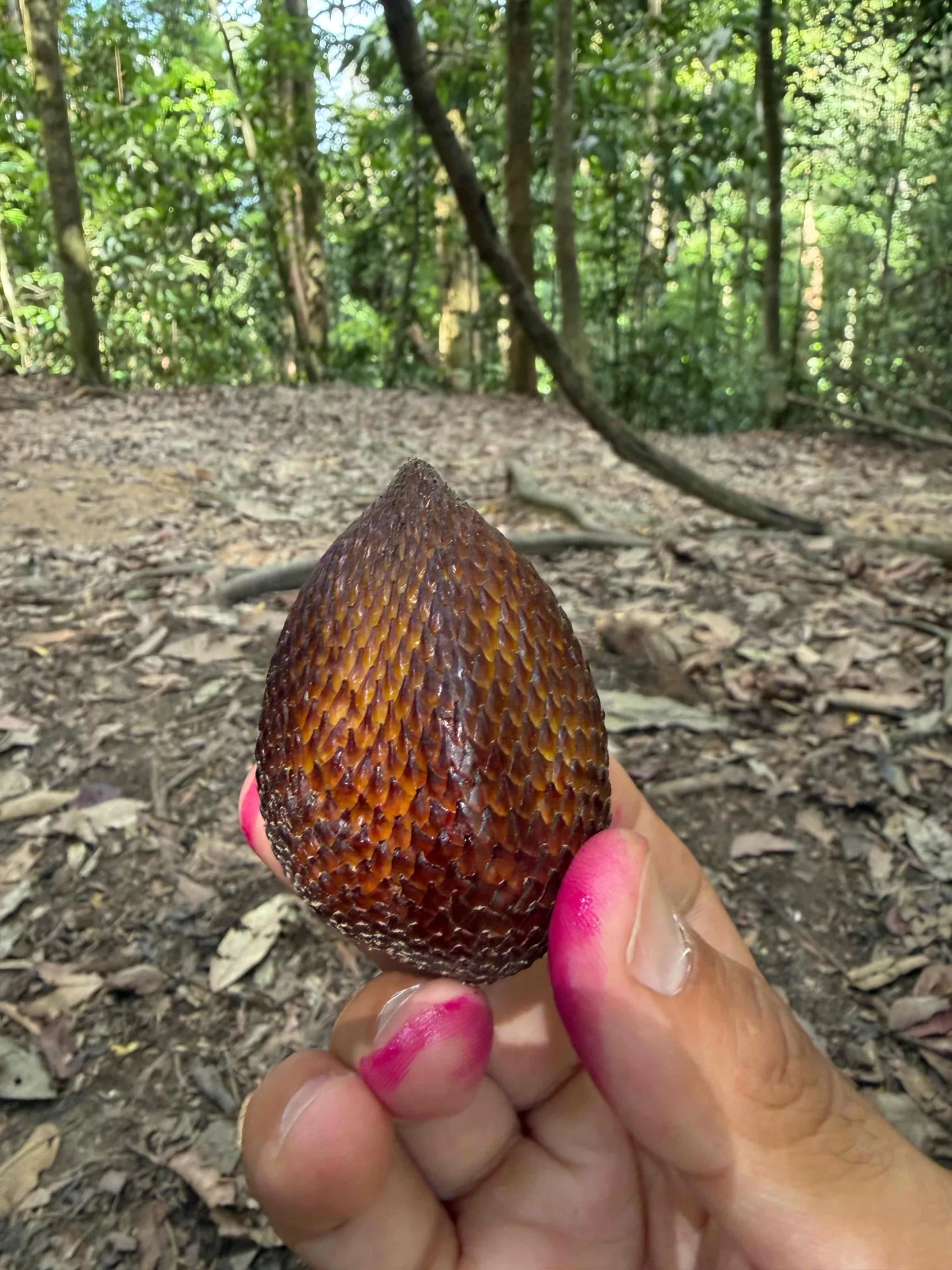
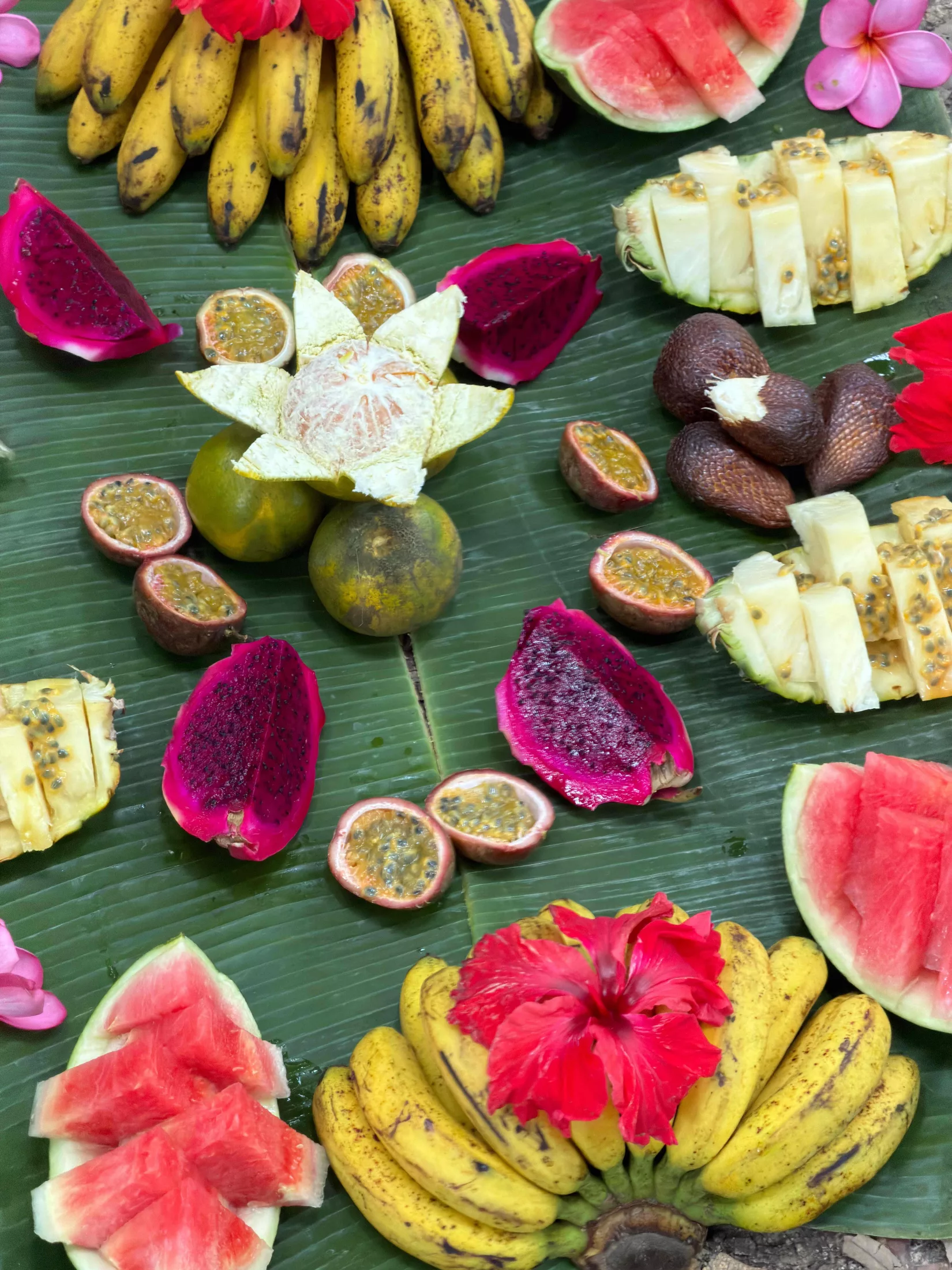
Salak, or snake fruit, is one of the most beautiful culinary discoveries of our visit to Sumatra. During our trek into the Gunung Leuser jungle to meet the orangutans, we were served it as dessert at almost every meal, right on the mat in the middle of the jungle. A total revelation: difficult to imagine a fruit so good, and above all so unique.
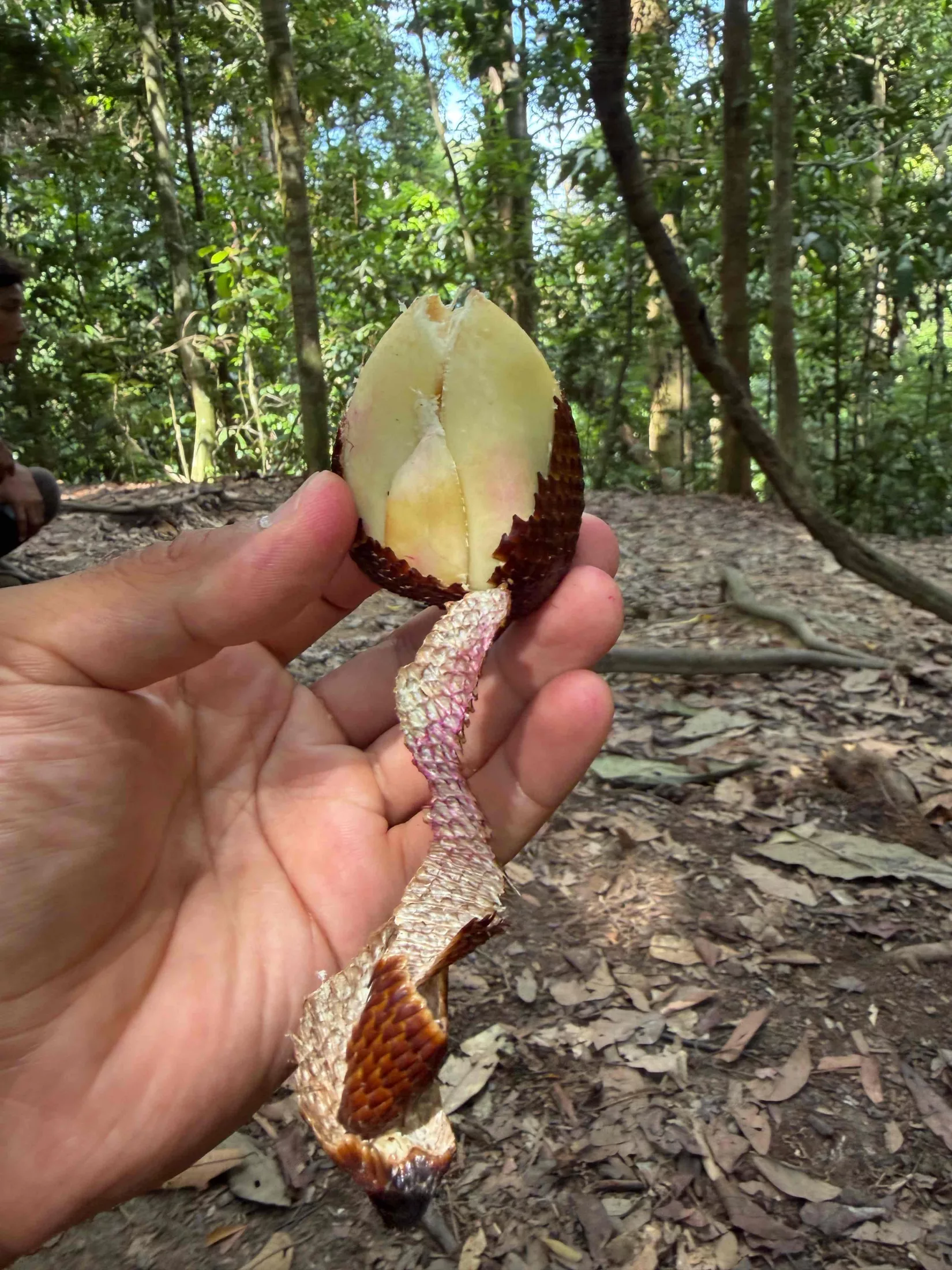
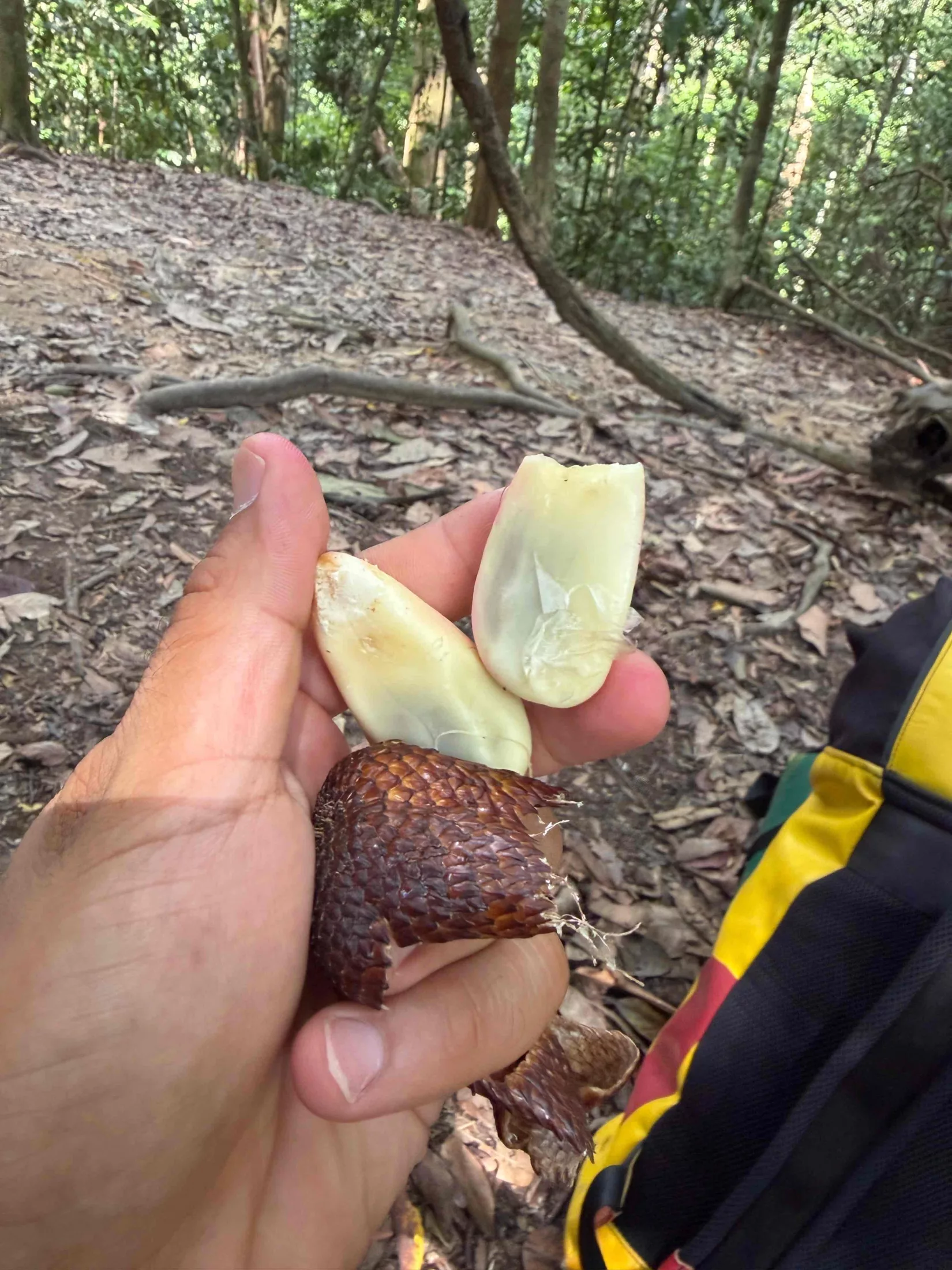
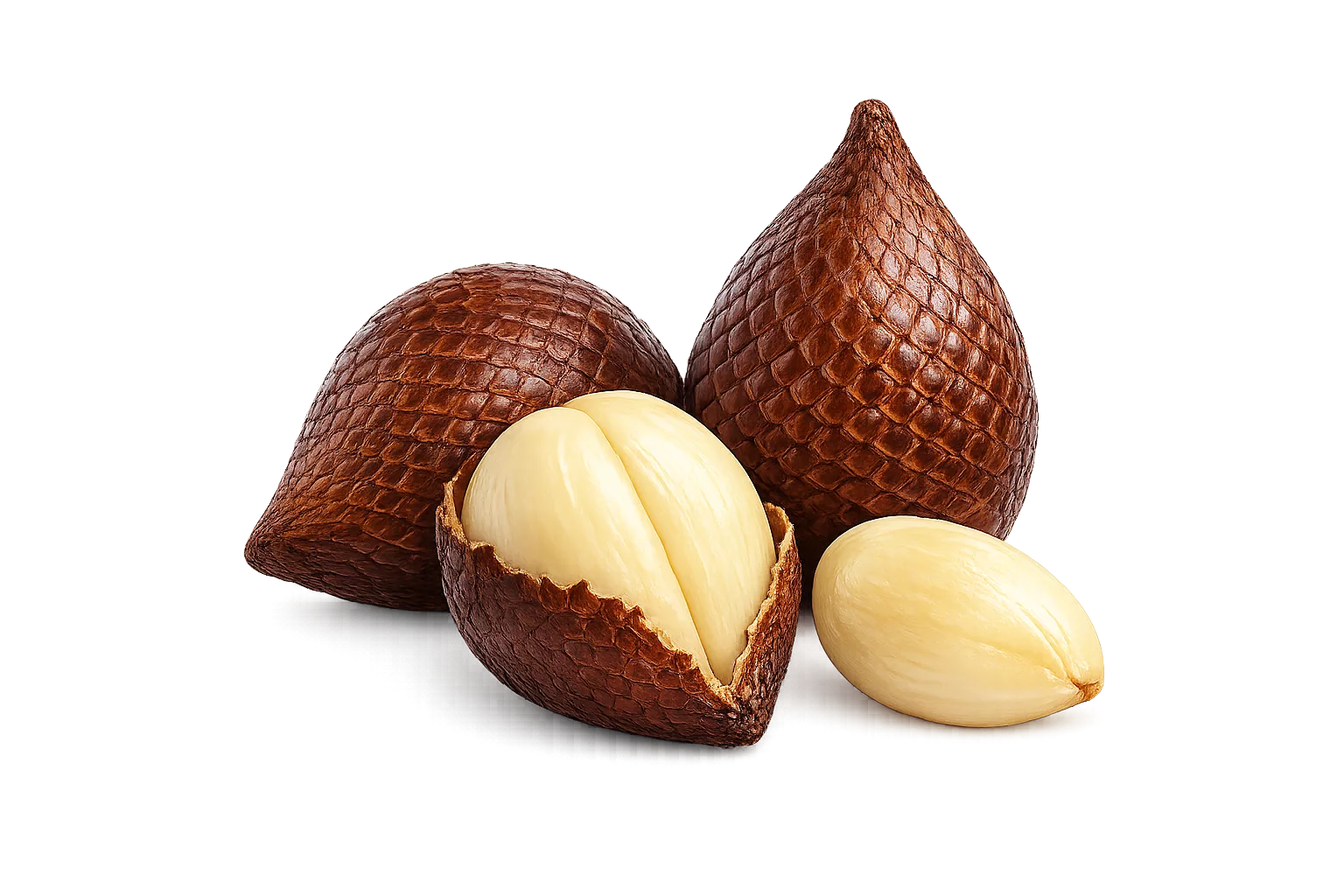
We must first talk about its appearance, because it is what is immediately striking. Its finely scaled red-brown skin looks like snake skin, hence its nickname. The size is that of a large fig, with a characteristic point at one end. It is easily peeled by breaking off the top end, and the interior reveals several pearly white lobes, a bit like garlic cloves, around a hard core.
Taste-wise, it’s a real surprise. The flesh is firm and crunchy, almost like an apple, with a sweet and tangy scent at the same time, a slight hint of astringency and notes vaguely reminiscent of pineapple or pear. Nothing comparable to what we know in Europe.
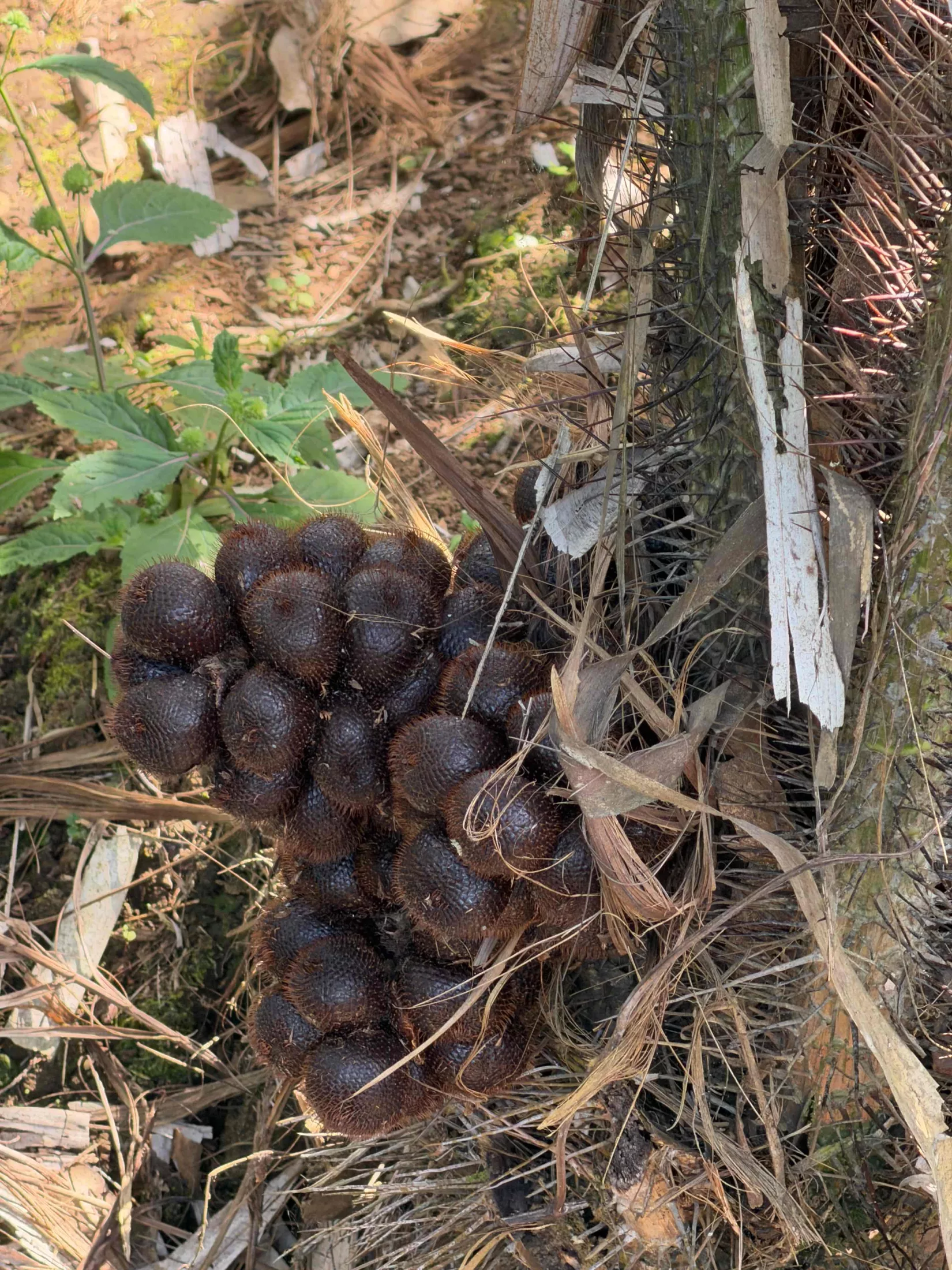
Salak grows on a palm tree in the Arecaceae family, native to Java and Sumatra, and the fruits appear in tight clusters at the base of the trunk. Today, it is cultivated throughout Indonesia as well as in Thailand, Malaysia and the Philippines, but Sumatra and Bali remain its favorite lands.
Beyond the taste, salak is also a surprisingly nutritious fruit. It is rich in iron, vitamin C, calcium, phosphorus and fiber, and contains five times more beta-carotene than watermelon, mango or guava, making it an excellent natural antioxidant. In traditional Indonesian medicine, it is also used to relieve digestive disorders and boost energy.
We ate so many during this trek that it remained associated for us with this whole experience: the jungle, the humidity, the sounds of invisible birds, and these simple moments shared around an improvised dessert in the middle of the forest.